Machines don’t warn you before they start. One second, a press is idle—next, it activates mid-maintenance, crushing limbs or worse. This isn’t rare. According to OSHA, nearly 10% of serious industrial accidents involve unexpected energization of equipment. That’s where lockout and tagout come in: not just procedures, but lifelines.
So what is tagout and lockout? It’s a formalized safety process designed to isolate hazardous energy sources during maintenance or servicing. While often used together, lockout and tagout serve distinct but complementary roles in preventing injury. Misunderstanding either can cost lives.
Let’s break down what these terms mean, how they work, and why relying on one without the other is a gamble.
The Core Purpose: Controlling Hazardous Energy
At its foundation, lockout/tagout (LOTO) exists to neutralize energy sources—electrical, hydraulic, pneumatic, chemical, thermal, or gravitational—before workers interact with machinery. Simply turning off a machine isn’t enough. Residual energy can linger, or systems can auto-restart.
Imagine a technician clearing a jam in a conveyor belt. The machine appears off. But a colleague, unaware of the work, hits the restart button from a remote station. Without LOTO, that technician could be pulled into moving parts within seconds.
LOTO ensures this doesn’t happen. It’s not just about stopping motion—it’s about proving the system is de-energized and kept that way until work is complete.
What Is Lockout?
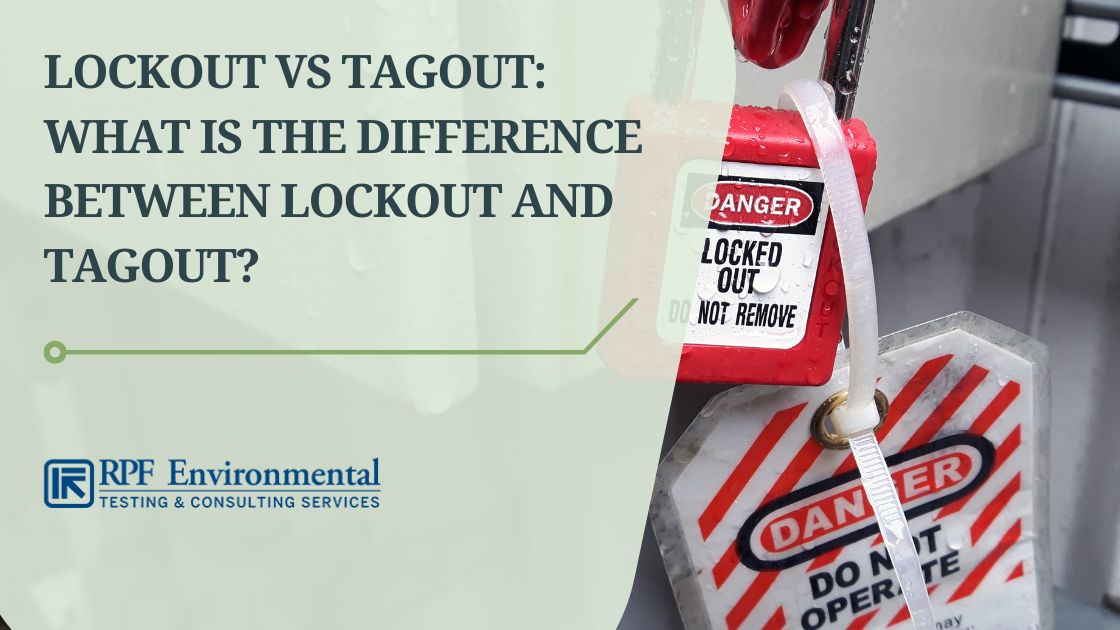
Lockout refers to the physical isolation of energy sources using a lockable device. This could be a hasp on a circuit breaker, a valve lock, or a plug lockout. The lock is applied by the authorized employee and only they hold the key—no exceptions.
Key components of lockout:
- Energy-isolating device: A disconnect switch, circuit breaker, or valve that stops energy flow.
- Lockout device: A padlock or group lockbox that secures the isolating device in the “off” position.
- Personal responsibility: Each worker on a job applies their own lock. Multiple locks mean multiple workers.
Real-world example: An electrician servicing a 480V motor disconnects the breaker, attaches a lockout hasp, and applies their personal lock. Even if someone tries to re-energize the circuit, the lock prevents access. Only the electrician can remove it.
Common mistake: Using a single master lock for multiple workers. This violates OSHA rules—each individual must apply their own lock so no one can unknowingly restart equipment.
What Is Tagout?
Tagout is the use of warning tags—brightly colored, standardized labels—attached to energy-isolating devices to signal that equipment is undergoing maintenance and should not be operated.
Tags typically include: - Name of the worker - Department or shift - Date and time of application - Reason for the tag - Warning statements ("Do Not Operate")
But here’s the catch: tagout alone does not physically prevent energy release. It relies on human compliance.
When is tagout used? When equipment lacks built-in lockout points, or when lockout isn’t feasible (e.g., certain plug-in tools). However, OSHA considers tagout less secure than lockout and requires additional protective measures when used alone.

Example scenario: A CNC machine has no lockable disconnect. A technician places a tag on the power cord with their name and warning. But if someone cuts the tag or ignores it, the machine can still be powered. That’s why OSHA mandates extra steps—like removing fuses or blocking moving parts—when relying solely on tags.
Lockout vs. Tagout: Strengths and Limitations
| Feature | Lockout | Tagout |
|---|---|---|
| Physical restraint | Yes | No |
| Relies on human behavior | Minimal | High |
| OSHA preference | Required where feasible | Secondary measure |
| Protection level | High | Moderate (with added controls) |
| Risk if bypassed | Low (mechanically blocked) | High (easily ignored) |
In practice, the best systems use both. The lock prevents accidental startup. The tag communicates why and who is responsible.
OSHA’s standard 29 CFR 1910.147 clearly states: > “Tagout systems must be supplemented by additional safety measures if they’re used in place of lockout.”
This means double-checking zero energy, using backup blocks, or increasing supervision.
The 6-Step LOTO Procedure (OSHA-Compliant)
Even with the right tools, skipping steps defeats the purpose. A full LOTO process isn’t just slapping on a lock and tag—it’s a sequence.
- Preparation
- Identify all energy sources (electrical, hydraulic, etc.) and the correct isolation points.
- Notification
- Inform affected employees that maintenance is starting and shutdown is imminent.
- Shut Down
- Use normal stopping procedures. Never assume the machine is off—verify.
- Isolation
- Disconnect or block all energy sources. This is where lockout devices are applied.
- Apply Locks and Tags
- Each authorized worker places their personal lock and tag. Use group lockout boxes if multiple people are involved.
- Verify Zero Energy
- Test the machine—press start, check voltage, inspect lines. This is the final proof.
One plant manager told me: “We had a guy lose two fingers because they skipped verification. The breaker was off, but capacitors still held charge. Always test.”
Common LOTO Failures and How to Avoid Them
Even companies with LOTO programs make mistakes. Here are the most frequent—and fixable—errors:
- Using tagout when lockout is possible
- OSHA allows tagout only when physical locks aren’t feasible. Yet many sites default to tags for convenience. Don’t.
- Group lockouts without accountability
- In multi-person jobs, using a single lockbox is fine—but every worker must attach their own lock. No shared keys.
- Inadequate training
- Affected employees (those who operate equipment) need basic LOTO awareness. Authorized employees (who service it) need full training.
- Failure to update procedures
- Machines change. New energy sources appear. LOTO procedures must be reviewed annually and after modifications.
- Ignoring stored energy
- Springs, elevated loads, or pressurized lines can release energy even after power-off. Always dissipate or block them.
Industries That Depend on LOTO
LOTO isn’t optional—it’s embedded in high-risk sectors:
- Manufacturing: Conveyor systems, presses, robotic arms
- Utilities: High-voltage switchgear, turbines, transformers
- Construction: Mobile cranes, concrete pumps, demolition tools
- Healthcare: MRI machines, sterilizers, surgical equipment
- Food Processing: Mixers, slicers, packaging lines
A meat processing plant in Iowa reduced severe injuries by 78% within two years of enforcing strict LOTO—proving it’s not just compliance, but a culture shift.
Real-World Example: The Cost of Skipping LOTO

In 2019, a maintenance worker at a paper mill entered a pulper tank to clear debris. The machine wasn’t locked out. A supervisor restarted it remotely. The worker was killed instantly.
An investigation revealed: - No lockout device was used - Tags were missing - The procedure existed—but wasn’t enforced
This wasn’t an equipment failure. It was a procedural collapse.
Cases like this are why OSHA fines companies up to $150,000 per violation. More importantly, they’re why LOTO must be non-negotiable.
Equipment Used in LOTO Programs
Effective lockout/tagout relies on the right tools. Here are five essential types:
| Tool | Purpose | Example Use Case |
|---|---|---|
| Circuit breaker lockouts | Secures electrical disconnects | Locking out a motor control center |
| Valve lockout devices | Prevents valve operation | Isolating steam lines during pipe repairs |
| Padlocks (safety-specific) | Personal locks with employee ID | Each technician applying their own lock |
| Tagout tags | Visual warning and information | Notifying others during multi-shift work |
| Group lockout stations | Holds multiple locks during team work | Coordinating maintenance on a production line |
High-quality LOTO kits include standardized tags, durable locks, and clear instructions. Avoid cheap, generic versions—they often fail under industrial conditions.
Build a LOTO Program That Actually Works
Great LOTO isn’t just policy—it’s practice. Follow these steps:
- Audit every machine
- Map energy sources and isolation points.
- Write machine-specific procedures
- One-size-fits-all doesn’t work. A press needs different steps than a boiler.
- Train and retrain
- Annual refreshers, plus training for new hires or equipment.
- Enforce accountability
- Supervisors must verify compliance—not assume it.
- Inspect and improve
- Monthly audits catch gaps before accidents do.
One auto parts facility assigns “LOTO champions” per shift. They review procedures, inspect locks, and report issues. Injury rates dropped 60% in 18 months.
LOTO isn’t bureaucracy. It’s a system that turns assumptions into proof. Lockout stops energy. Tagout communicates intent. Together, they create a culture where safety isn’t hoped for—it’s guaranteed.
Start today: pick one machine, verify its LOTO procedure, and test it. Then do it again tomorrow. That’s how lasting safety is built.
FAQ
What is the difference between lockout and tagout? Lockout physically prevents energy release using a lock. Tagout uses a warning tag but doesn’t block operation—making it less secure.
Is tagout allowed by OSHA? Yes, but only when lockout isn’t feasible. Tagout requires additional safety measures like extra verification or equipment blocking.
Who is responsible for applying LOTO? Authorized employees—those trained to service equipment—must apply their own locks and tags.
Can multiple people work on the same machine? Yes, using a group lockout box. Each worker applies their personal lock before starting work.
What happens if a worker forgets to remove their lock? The machine stays locked until the employee returns. Supervisors may remove locks under strict procedures—only after verifying the worker is clear.
Do LOTO procedures apply to plug-in tools? Yes. Unplugging a tool isn’t enough. The plug must be locked out or tagged, and the worker must retain control.
How often should LOTO procedures be reviewed? Annually, or whenever equipment changes. OSHA requires periodic inspections to ensure compliance.
FAQ
What should you look for in What Is Tagout and Lockout? A Complete Safety Guide? Focus on relevance, practical value, and how well the solution matches real user intent.
Is What Is Tagout and Lockout? A Complete Safety Guide suitable for beginners? That depends on the workflow, but a clear step-by-step approach usually makes it easier to start.
How do you compare options around What Is Tagout and Lockout? A Complete Safety Guide? Compare features, trust signals, limitations, pricing, and ease of implementation.
What mistakes should you avoid? Avoid generic choices, weak validation, and decisions based only on marketing claims.
What is the next best step? Shortlist the most relevant options, validate them quickly, and refine from real-world results.