Broadway’s latest attempt to resurrect 1980s pop culture as musical theater has arrived—and it’s biting back. The Lost Boys, adapted from the 1987 cult vampire film, has landed with a mix of intrigue, nostalgia, and skepticism. Critics have spoken, and their verdicts are as divided as the film’s original fanbase. While some hail the production as a thrilling, campy homage, others question whether turning a stylish teen horror flick into a stage musical was ever a wise idea.
This isn’t just another jukebox musical. The Lost Boys attempts to translate the film’s neon-soaked, synth-driven world of Santa Carla, California—a place where bikers, surfers, and vampires clash—into a live theatrical experience. With a book by James Hindman, music and lyrics by Robert Lindsey-Nassif and Jimmy Funk, and direction by Noah Himmelstein, the show leans into its genre roots: horror, comedy, and teen melodrama. But how do the critics feel about this bold fusion?
Let’s break down the consensus, the surprises, and the moments that left reviewers torn.
The Critical Reception: A Split Verdict
If there’s one thing critics agree on, it’s that The Lost Boys on Broadway doesn’t play it safe. The show is loud, flashy, and unapologetically campy—traits that some reviewers embraced, while others found exhausting.
Positive takes highlight the show’s energy, inventive staging, and sheer commitment to its tone. The New York Times praised the production for “turning vampire lore into a neon-drenched rock opera that thrives on its own absurdity.” Similarly, Variety noted that the musical “captures the anarchic spirit of the original” and called the choreography “a standout—equal parts punk rebellion and vampire elegance.”
On the flip side, negative reviews accuse the show of style over substance. The Hollywood Reporter was particularly critical, stating, “For all its spectacle, The Lost Boys forgets to make us care about its characters.” Deadline echoed this sentiment, arguing that the adaptation “struggles to sustain narrative momentum across two acts.”
The divide often comes down to taste: do you value theatrical audacity over emotional depth? If yes, this show might be your kind of fang.
The Good: Where Critics Applauded
Several elements earned consistent praise across reviews, even from skeptics.
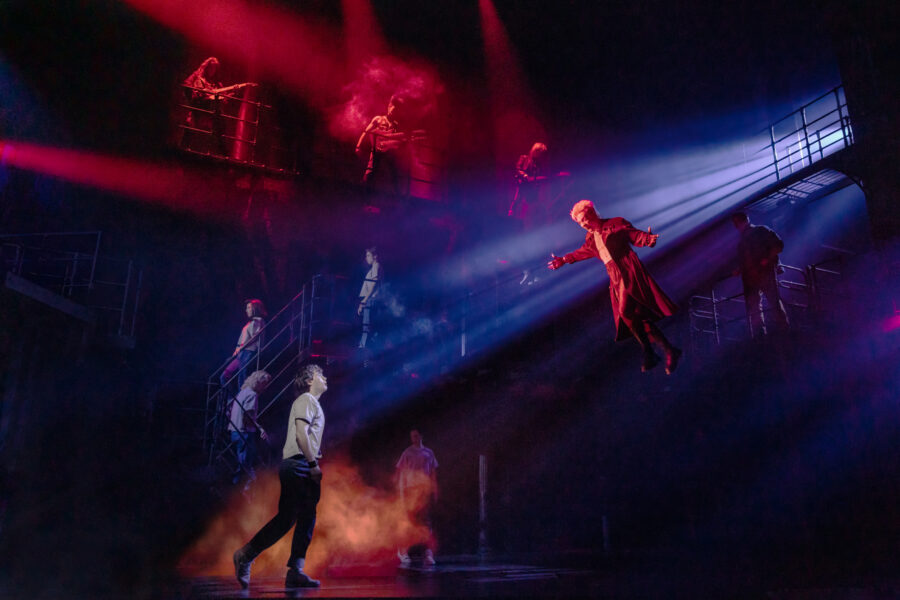
#### High-Octane Choreography and Visual Design Critics universally lauded the show’s physicality. The fight scenes between the vampires and the “Frog” brothers are choreographed with a blend of martial arts and dance that one Vulture reviewer described as “a ballet of blood and BMX bikes.” The use of aerial rigging for vampire flight sequences was also highlighted as a technical triumph, creating moments of genuine awe.
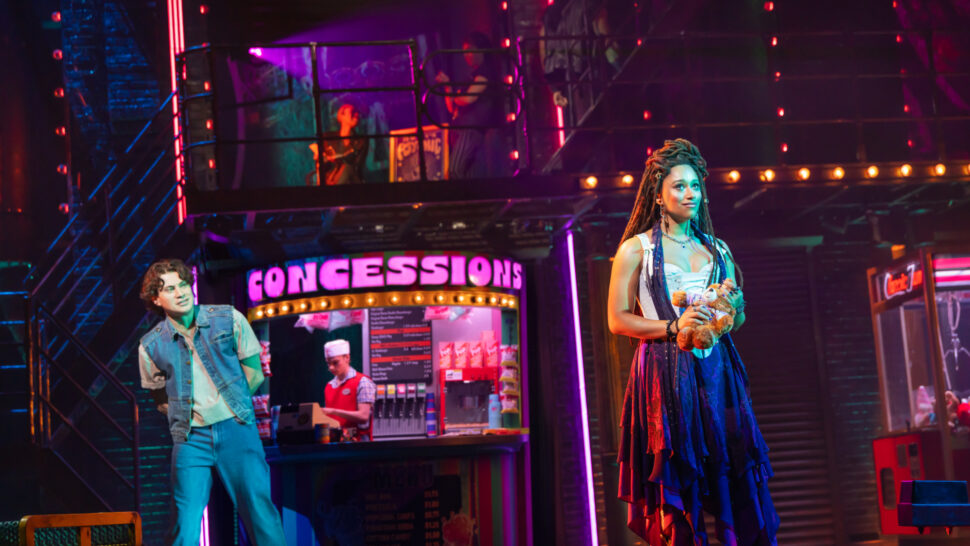
The set design—ranging from a pulsating boardwalk to a subterranean vampire lair—was called “immersive” by The Wrap. Lighting and projection work amplify the dreamlike, sometimes surreal tone, making Santa Carla feel like a fever dream of 1980s youth culture.
#### Strong Performances Anchor the Chaos Michael James Scott, playing the charismatic vampire leader David, received repeated acclaim for his magnetic stage presence. Playbill noted he “brings both menace and Michael Jackson swagger,” a description echoed by multiple outlets.
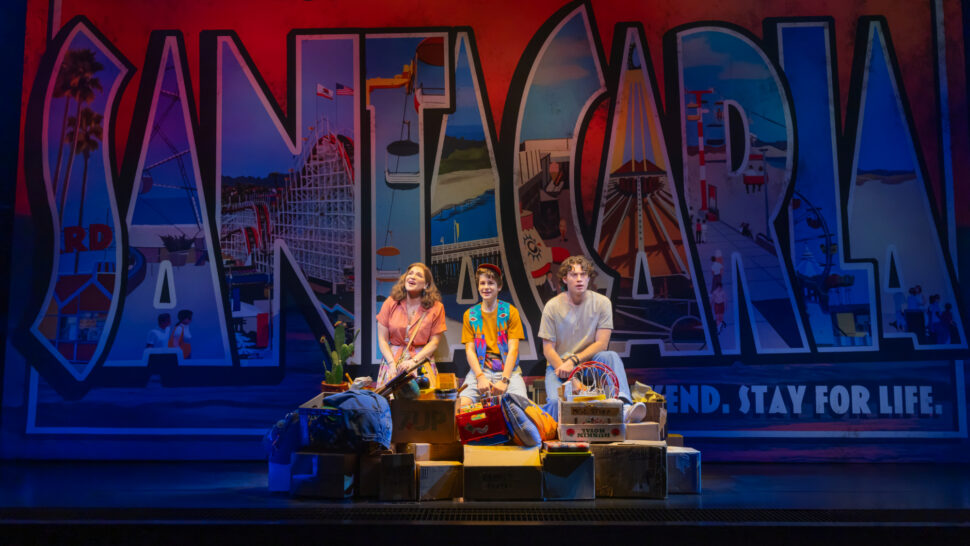
Equally praised was newcomer J.D. Mollison as Sam Emerson, the younger brother whose comic timing and vocal clarity cut through the show’s darker moments. Critics appreciated that the actors didn’t parody their roles but played them with sincerity—even when the material leaned into camp.
#### A Smart, Nostalgic Score with Modern Edge The musical doesn’t rely on 1980s hits. Instead, the original score channels the era’s sonic textures—synth basslines, reverb-heavy guitars, and moody ballads—while injecting modern pop sensibilities. Numbers like “Neon Eyes” (David’s villain anthem) and “Brothers of Blood” (a duet between the vampire siblings) were singled out as highlights.
Rolling Stone called the music “surprisingly cohesive,” noting that the composers “understand that nostalgia works best when it’s filtered through something fresh.”
The Caveats: What Critics Found Lacking
Even positive reviews included reservations. The most common criticisms reveal deeper structural issues.
#### Pacing Problems in the Second Act Multiple critics pointed out that the show “loses momentum after intermission.” The Guardian observed that while the first act thrives on mystery and build-up, the second act “rushes toward its climax without sufficient emotional payoff.” The final confrontation, though visually impressive, felt “rushed” to several reviewers.
This issue may stem from the challenge of adapting a 90-minute film into a two-hour musical. The addition of new subplots—particularly one involving a romance between Lucy and Max, the vampire-in-human-form—were seen by some as padding rather than enhancement.
#### Tone Wobbles Between Horror and Comedy While the show aims for a balance of scares and laughs, not all critics felt it struck the right chord. IndieWire noted, “The moments meant to terrify are often undercut by a wink to the audience,” weakening the stakes. The decision to play many vampire deaths as slapstick—think cartoonish spurts of “blood” and exaggerated collapses—was divisive.
Fans of the original film’s eerie atmosphere might find this tonal inconsistency jarring.
#### Character Development Takes a Backseat Despite strong performances, some critics argued that characters remain underdeveloped. Michael, the older Emerson brother and reluctant vampire-in-waiting, is given fewer solos and emotional arcs than expected. The Atlantic remarked, “We’re told he’s torn between worlds, but we’re never shown the weight of that choice.”
Similarly, Star, the film’s enigmatic love interest, is given a new song (“Frayed”) that explores her vulnerability—but critics felt it arrived too late to deepen her impact.
How Does It Compare to Other 80s Adaptations?
The Lost Boys joins a growing list of 1980s films turned into stage musicals—Back to the Future, Mean Girls, The Breakfast Club (in development). How does it stack up?
| Musical | Critical Reception | Strengths | Weaknesses |
|---|---|---|---|
| The Lost Boys | Mixed to positive | Visual innovation, energy, lead performances | Uneven pacing, tonal imbalance |
| Back to the Future: The Musical | Mostly favorable | Faithful adaptation, technical spectacle | Lacks emotional depth |
| Mean Girls | Strong | Sharp writing, modern themes | Over-reliance on film nostalgia |
| Footloose | Mixed | High-energy dance | Thin plot, dated themes |
Where The Lost Boys stands out is in its commitment to genre. Unlike Mean Girls, which softens its edges for broad appeal, or Back to the Future, which prioritizes mechanics over mood, The Lost Boys leans into its identity as a vampire rock musical. That boldness earns it points for originality—even if it doesn’t always succeed.
Audience Reaction vs. Critical Opinion
Interestingly, audience response has been warmer than critical consensus. At post-show talkbacks and on social media, fans have called the show “a love letter to the original” and praised its “unabashed fun.” Many appreciate that it doesn’t try to be Hamilton or Dear Evan Hansen—it’s a genre piece that knows its audience.
This disconnect isn’t unusual. Critics often weigh narrative coherence and emotional resonance more heavily, while fans value nostalgia, spectacle, and community. For a property like The Lost Boys, which thrives on cult status, audience reception may ultimately matter more than reviews.
Still, the critical split could impact longevity. Without strong Tony buzz or must-see urgency, the show may struggle to extend beyond its initial run unless word-of-mouth sustains it.
The Bottom Line: Should You See It?
If you’re asking whether The Lost Boys on Broadway is “good,” the answer depends on what you’re looking for.
See it if you: - Love the original film and want to experience it reimagined - Enjoy theatrical spectacle—flying vampires, neon lighting, and synth-rock - Appreciate bold, genre-blending musicals that don’t take themselves too seriously
Skip it if you: - Prefer character-driven stories with emotional depth - Dislike campy humor or tonal inconsistency - Expect a faithful, straight adaptation of the movie
The show isn’t perfect, but it’s alive—ferociously so. It stumbles, hisses, and occasionally soars. For a certain kind of theatergoer, that’s more than enough.
Practical Takeaways for Theatergoers
- Arrive early: The pre-show atmosphere mimics a 1980s boardwalk, with actors in costume mingling and retro music playing.
- Sit close to the stage: The aerial work and physical comedy are best appreciated up front.
- Embrace the camp: The more you lean into the absurdity, the more fun you’ll have.
- Check for rush/ticket lotteries: Given mixed reviews, premium pricing may not be justified for first-time viewers.
The verdict on The Lost Boys isn’t unanimous—but it doesn’t need to be. In an era of risk-averse adaptations, this musical dares to be weird, wild, and wonderfully theatrical. Whether it sinks its teeth into Broadway history or fades into cult footnote status may depend less on critics and more on the fans who still believe in vampire bike gangs and the power of garlic necklaces.
If you’re ready to believe, the show’s waiting—with fangs bared and synth beats blasting.
FAQ
Is The Lost Boys on Broadway a direct remake of the movie? No, it’s a stage adaptation with creative liberties, including new songs and expanded subplots, but it follows the film’s core story.
How scary is the musical? It has horror elements, but leans more into camp and suspense than genuine scares. Suitable for teens and up.
Are any original cast members involved? No actors from the 1987 film appear, but director Joel Schumacher’s estate approved the adaptation.
Is the music from the 80s? No, it features an original score inspired by 80s synth-rock, not period hits.
How long is the show? Approximately 2 hours and 15 minutes, including a 15-minute intermission.
Does it have the famous vampire transformation scene? Yes, the mirror scene is recreated with theatrical effects and lighting tricks.
Is it appropriate for children? Recommended for ages 13+, due to dark themes, stylized violence, and intense scenes.
FAQ
What should you look for in What Critics Are Saying About The Lost Boys on Broadway? Focus on relevance, practical value, and how well the solution matches real user intent.
Is What Critics Are Saying About The Lost Boys on Broadway suitable for beginners? That depends on the workflow, but a clear step-by-step approach usually makes it easier to start.
How do you compare options around What Critics Are Saying About The Lost Boys on Broadway? Compare features, trust signals, limitations, pricing, and ease of implementation.
What mistakes should you avoid? Avoid generic choices, weak validation, and decisions based only on marketing claims.
What is the next best step? Shortlist the most relevant options, validate them quickly, and refine from real-world results.