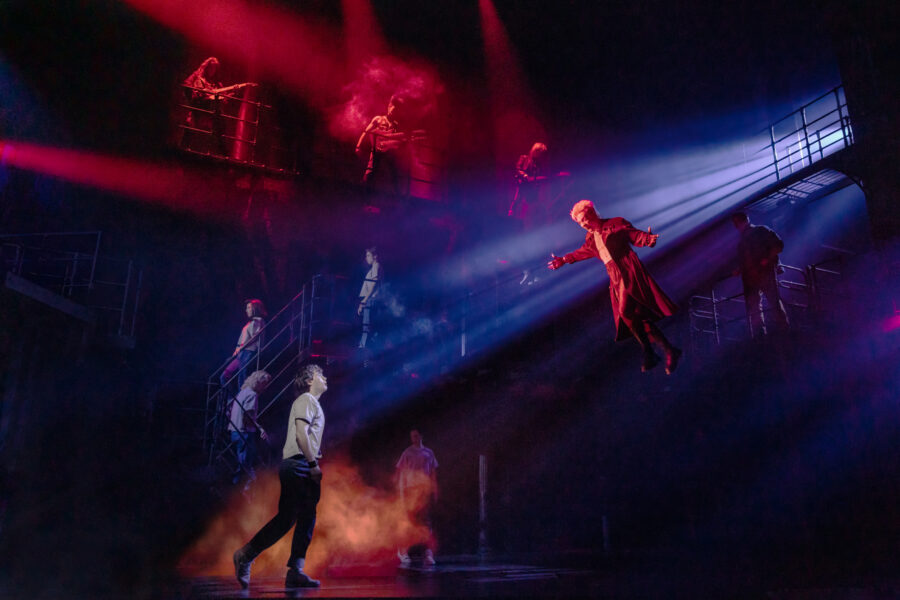
It doesn’t matter how polished the choreography is or how eerily accurate the voice mimicry sounds—if a biopic can’t make you feel the truth of a person’s life, it has failed. The recent Michael Jackson film does exactly that. Despite access to archives, music rights, and decades of public record, it sidesteps the emotional, artistic, and cultural weight of its subject. Instead of illuminating the man behind the moonwalk, it delivers a sanitized highlight reel that dodges the very questions that define his legacy.
A biopic’s job isn’t to glorify. It’s to grapple.
And this film refuses to grapple with Michael Jackson.
It Prioritizes Image Over Insight
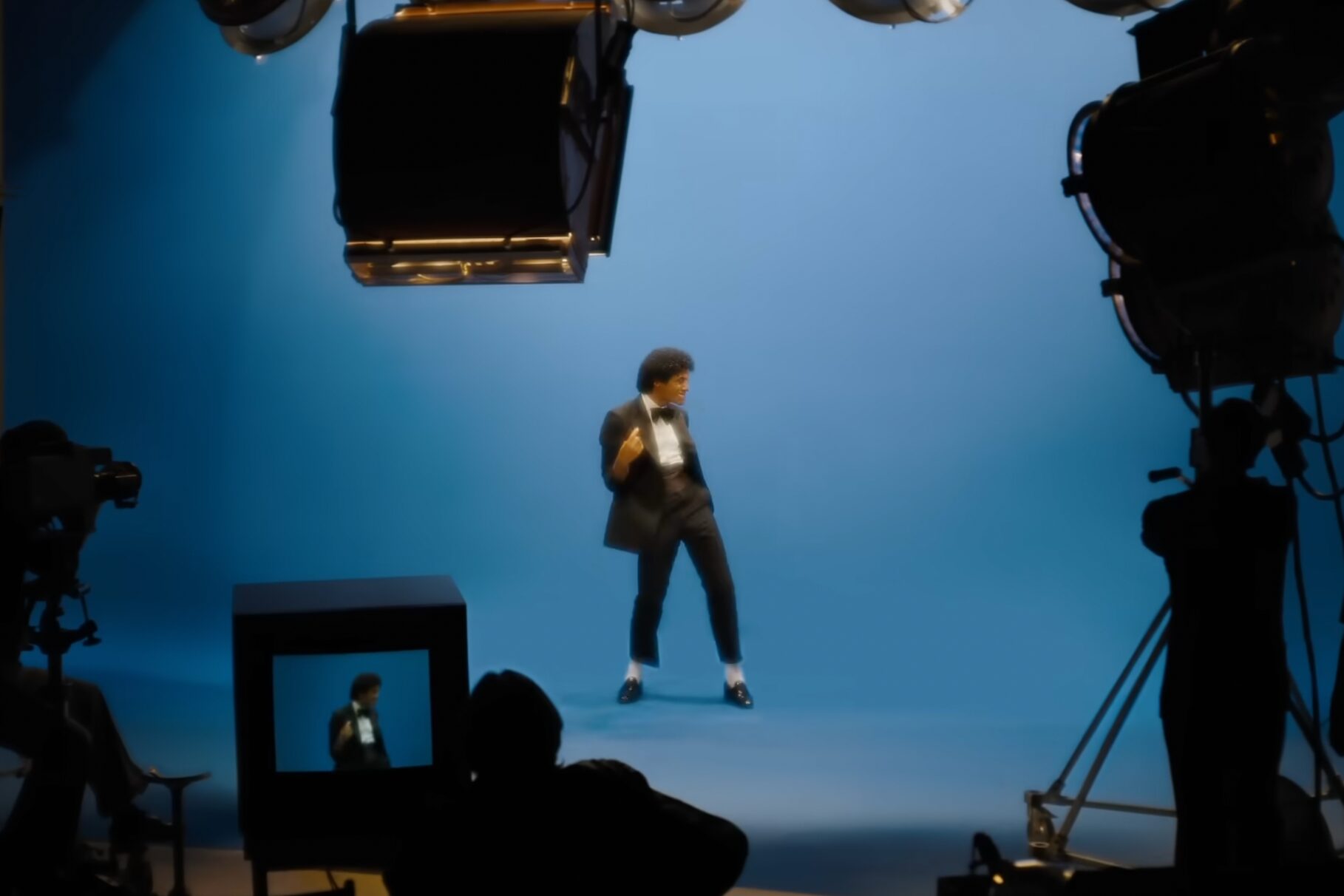
From the opening sequence—a recreation of the 1983 Motown 25 performance—the film leans hard into spectacle. The camera lingers on the red jacket, the sharp angles of the dance moves, the gasp of the crowd. But it doesn’t ask: Why did that moment electrify the world? What had Jackson endured to get there?
The truth is, Michael Jackson wasn’t just a performer. He was a child star molded by an abusive father, a Black artist navigating a segregated industry, and a man whose relationship with fame began warping long before the Neverland scandals. The film shows his talent but ignores the trauma that shaped it.
Compare this to Walk the Line, which framed Johnny Cash’s genius through his addiction, poverty, and turbulent love life. Or Ray, which didn’t flinch from Ray Charles’ heroin use or complicated sexuality. Those films understood that greatness is rarely clean. Greatness is often born from pain.
This Michael Jackson film treats his pain like a liability.
Avoids the Real Controversies—On Purpose
Let’s be clear: addressing allegations doesn’t mean convicting someone in absentia. But refusing to engage with them—especially when they’re central to public perception—is editorial cowardice.
The film barely mentions the 1993 allegations. The 2005 trial gets a single, vague reference. Leaving Neverland, the seismic HBO documentary that redefined Jackson’s posthumous reputation, isn’t acknowledged at all. It’s as if the filmmakers pressed a mute button on the last 30 years of discourse.
This isn’t neutrality. It’s complicity.
Audiences aren’t children. They know the accusations exist. Avoiding them doesn’t protect Jackson’s legacy—it erases the audience’s ability to process it. A responsible biopic would have woven these threads into the narrative, not cut them out.
Imagine a scene where Jackson, in private, confronts his isolation. Where he speaks—through letters, interviews, or imagined monologue—about how the rumors shaped his retreat from the world. That would have been brave. That would have been honest.
Instead, we get a scene where he dances alone in a mirror maze. Symbolic? Yes. Substantive? No.
Flattens Relationships Into Clichés
Walter Flanagan once said, “Biopics aren’t about facts. They’re about truth.” And truth lives in relationships.
Yet this film reduces Jackson’s key connections to cardboard cutouts:
- Joe Jackson appears as a shouting caricature, barking orders and cracking whips. There’s no exploration of their complex bond—how Michael both resented and relied on his father’s discipline.
- Diana Ross is a fairy godmother figure, offering nurturing smiles and motherly advice. Their real mentorship and reported romantic tension? Gone.
- Elizabeth Taylor shows up for one scene, delivers a pep talk, and vanishes.
Even his creative partnerships—Quincy Jones, Berry Gordy—are reduced to transactional encounters. There’s no sense of collaboration, tension, or artistic evolution.
When Jackson records “Billie Jean,” the film shows him singing into a mic. That’s it. No discussion of his perfectionism, his fear of failure, or the racial barriers he was shattering on MTV. The moment feels weightless.
Contrast this with Bohemian Rhapsody, which—despite its flaws—gave us Freddie Mercury’s relationship with Mary Austin as an emotional anchor. Or I’m Not There, which used multiple actors to explore Bob Dylan’s fractured identities.
The Michael Jackson film offers none of that depth. It treats people as props.
The Music Feels Like Background Noise
It’s staggering: a film about one of history’s greatest musical innovators treats the music like decoration.
Songs appear in sequence—Thriller, Beat It, Smooth Criminal—but not in context. We don’t see the studio sessions, the arguments over mixes, the risks taken in production. The genius of Jackson’s vocal layering, his rhythmic precision, his storytelling through sound—it’s all invisible.
Take Thriller. The film shows the music video, complete with zombie dancers and red jackets. But it skips the backstory: how Jackson fought CBS Records to fund the $500,000 video. How he convinced John Landis to direct. How he used horror tropes to reclaim narrative control as a Black man in pop culture.
Instead, it becomes a nostalgic clip show.
Even worse, the film uses soundalike vocals instead of Jackson’s original recordings in dramatic scenes. A choice like that might work in a parody or low-budget indie—but here, it feels like a betrayal. You can’t tell Jackson’s story without his voice.
No other artist would be treated this way. Imagine a Beatles biopic using cover songs.
Misses the Cultural Impact Entirely
Michael Jackson wasn’t just a singer. He was a cultural force.
He broke MTV’s color barrier. He turned music videos into cinematic art. He influenced fashion, dance, and global pop for generations. His 1988 Moonwalker film, his humanitarian efforts, his bizarre tabloid presence—all of it shaped how we see celebrity today.
But the film reduces his influence to concert crowds and magazine covers.

There’s no mention of how Jackson inspired artists like Usher, Chris Brown, or The Weeknd. No exploration of how his fashion—gloves, fedoras, military jackets—became iconic. No discussion of his impact on Black representation in mainstream media.
Even his philanthropy—feeding the homeless, supporting children’s hospitals—is reduced to a throwaway line.
This isn’t a portrait. It’s a postcard.
The Estate’s Influence Is Too Obvious
Let’s talk about the elephant in the room: the Jackson estate is listed as a producer.
That doesn’t automatically invalidate the film, but it explains the editorial timidity. The estate controls the music rights, the archives, and the official narrative. And the film reads like a PR campaign, not a work of art.
Compare it to Amy, Asif Kapadia’s documentary on Amy Winehouse. That film was raw, unflinching, and critical—precisely because it wasn’t made with the family’s blessing. It won an Oscar.
This one feels designed to protect the brand.
There’s a difference between honoring a legacy and whitewashing it. This film chooses the latter.
What a Better Biopic Would Have Done
A great Michael Jackson film wouldn’t shy from complexity. It would embrace it.
It might open not with a performance, but with Jackson alone in a hotel room, watching one of his own videos on mute. It might use voice-over from his unpublished writings—his fears, his dreams, his regrets.
It could structure the narrative around three phases:
- The Machine – His childhood under Joe Jackson, the Motown years, the pressure to perform.
- The Peak – Off the Wall to Bad, the global fame, the racial breakthroughs.
- The Fracture – The changing face, the reclusiveness, the allegations, the isolation.
And it wouldn’t pretend the allegations don’t exist. It would present them—not as verdict, but as part of the story. Maybe through courtroom audio. Maybe through interviews with journalists who covered the trials. Maybe through Jackson’s own defensive statements.
It would also highlight his artistry—not just the hits, but the process. The 3 a.m. studio takes. The vocal experiments. The way he used music to escape.
And above all, it would let Jackson be human: brilliant, broken, contradictory.
That’s what a biopic should do.
Conclusion: A Missed Opportunity on Every Level
The Michael Jackson movie fails at the basic duty of a biopic because it refuses to wrestle with its subject. It gives us the silhouette but not the soul.
It’s not that the film is poorly made. The production values are high. The dance sequences are impressive. The casting is solid.
But reverence without reckoning is not storytelling. It’s shrine-building.
And Michael Jackson deserves better. Not as a saint. Not as a villain. But as a human being whose life demands honest examination.
We don’t need another tribute. We need truth.
If you’re going to make a film about one of the most complicated figures in modern culture, you have to go all the way in. This one stops short—right where it should dive deepest.
Frequently Asked Questions
Why is the Michael Jackson biopic considered a failure? It avoids the central controversies, flattens complex relationships, and prioritizes image over insight, failing to deliver a truthful or nuanced portrait.
Does the film include Michael Jackson’s original music? In performance scenes, yes. But in dramatic sequences, it uses vocal impersonators, which weakens emotional impact.
Why doesn’t the film address the abuse allegations? Likely due to influence from the Jackson estate, which co-produced the film and has an interest in protecting his public image.
How does this biopic compare to other music films? It falls short of films like Ray, Walk the Line, or Amy, which confront their subjects’ flaws with honesty and depth.
Could a better Michael Jackson biopic be made? Yes—but it would require creative independence, access to candid material, and a willingness to explore both his genius and his demons.
What did the film get right? The recreation of iconic performances and visual style is technically impressive, capturing the look and energy of Jackson’s stage presence.
Who should watch this biopic? Casual fans seeking nostalgia may enjoy it, but those looking for insight, truth, or cultural context will be disappointed.
FAQ
What should you look for in The Michael Jackson Movie Fails at the Basic Duty of a Biopic? Focus on relevance, practical value, and how well the solution matches real user intent.
Is The Michael Jackson Movie Fails at the Basic Duty of a Biopic suitable for beginners? That depends on the workflow, but a clear step-by-step approach usually makes it easier to start.
How do you compare options around The Michael Jackson Movie Fails at the Basic Duty of a Biopic? Compare features, trust signals, limitations, pricing, and ease of implementation.
What mistakes should you avoid? Avoid generic choices, weak validation, and decisions based only on marketing claims.
What is the next best step? Shortlist the most relevant options, validate them quickly, and refine from real-world results.